










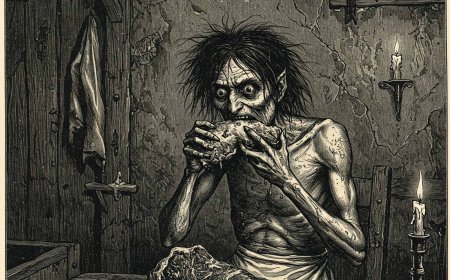



Human Evolution's Strangest Detours: Dead Ends and Oddities

Human Evolution's Strangest Detours: Dead Ends and Oddities
Human evolution, far from being a straightforward march from primitive ape to modern *Homo sapiens*, is a tangled web of diverse hominid species, evolutionary experiments, and ultimately, dead ends. Our family tree is more like a sprawling bush with many branches, most of which didn't lead to us. Exploring these evolutionary detours reveals just how contingent and, frankly, weird our own existence is. Okay, let's dive in.

Ape and Human Evolution Tree by Armin Kübelbeck, licensed under CC BY SA 3.0, via Wikimedia Commons
One of the most fascinating aspects of human evolution is the sheer diversity of hominid species that once roamed the Earth. These weren't just slightly different versions of ourselves; they were creatures with unique adaptations, behaviors, and ultimately, fates. Consider the Paranthropus genus, robust australopithecines characterized by their massive jaws and specialized teeth for grinding tough plant matter. They co-existed with our direct ancestors for a significant period, representing a separate evolutionary lineage that ultimately went extinct.
The "robust" australopithecines, such as *Paranthropus boisei*, possessed sagittal crests (bony ridges on the top of their skulls) to anchor powerful jaw muscles. These adaptations allowed them to exploit a niche unavailable to other hominids, but it also limited their adaptability to changing environments. As Dr. Bernard Wood, a renowned paleoanthropologist, noted, "Specialization can be a powerful advantage in the short term, but it can also be a trap."

Paranthropus boisei IMG 2932 by Rama, licensed under Public domain, via Wikimedia Commons
Another interesting detour involves the hobbits of Flores Island, *Homo floresiensis*. Discovered in 2003, these tiny hominids, standing at around 3.5 feet tall, lived as recently as 50,000 years ago. Their small stature is believed to be an example of island dwarfism, a phenomenon where isolated populations evolve smaller body sizes due to limited resources. The existence of *Homo floresiensis* challenges our understanding of human evolution and raises questions about the factors that drive brain size and intelligence. Okay, this is where things get fascinating. What caused these species to fade away?
Furthermore, the story of Neanderthals is not a linear one. Evidence suggests that Neanderthals and *Homo sapiens* interbred, leaving a small percentage of Neanderthal DNA in the genomes of modern humans of non-African descent. This interbreeding implies a degree of compatibility between the two species, but it also raises questions about the nature of their interactions and the reasons for Neanderthal extinction. Some theories suggest that competition for resources, climate change, or a combination of factors led to their demise.
Source: Lex Clips
Even within our own lineage, *Homo*, there were evolutionary experiments that didn't lead directly to us. *Homo erectus*, for example, was a highly successful species that migrated out of Africa and persisted for over a million years. While *Homo erectus* is considered an ancestor of modern humans, the exact relationship is complex, and various populations of *Homo erectus* may have contributed to different hominid lineages. The story of *Homo erectus* highlights the importance of geographic variation and adaptation in human evolution.
The Denisovans, discovered in Siberia, represent another relatively recent and surprising addition to the human family tree. Like Neanderthals, Denisovans interbred with *Homo sapiens*, and their DNA is found in some present-day human populations, particularly in Southeast Asia and Oceania. The discovery of the Denisovans underscores the fact that human evolution was not a simple branching process, but rather a complex network of interbreeding and gene flow.

Xiahe mandible by Dongju Zhang, licensed under CC BY SA 4.0, via Wikimedia Commons
One important point to remember when discussing human evolution is that "primitive" does not equal "inferior." Each hominid species was adapted to its own environment and possessed its own unique set of skills and abilities. The fact that *Homo sapiens* ultimately prevailed does not necessarily mean that we were "better" than other hominids; it simply means that we were better suited to the specific challenges and opportunities that we faced. Okay, let's summarize.
Explore further with this search query: "Hominid evolution dead ends and adaptations"
Key Takeaways
Reliable Sources
Share your thoughts on human evolution and which "dead end" you find most fascinating!
Further Reading
What are your thoughts on this topic? Share your ideas in the comments below or explore more articles for deeper insights!
What's Your Reaction?
 Like
0
Like
0
 Dislike
0
Dislike
0
 Love
0
Love
0
 Funny
0
Funny
0
 Angry
0
Angry
0
 Sad
0
Sad
0
 Wow
0
Wow
0