

















James Webb Space Telescope: Unveiling Cosmic Dawn, Exoplanets, and Galactic Mysteries
Explore how NASA/ESA’s James Webb Space Telescope (JWST) is rewriting astronomy textbooks with its infrared vision, revealing star formation, exoplanet atmospheres, and the universe’s first galaxies.

The James Webb Space Telescope (JWST), launched in 2021, has become humanity’s most powerful window into the cosmos. With its infrared capabilities, it peers through cosmic dust to study the universe’s first galaxies, star-forming nebulae, and potentially habitable exoplanets. Let’s delve into its groundbreaking discoveries and technological marvels :cite[5]:cite[8].
JWST’s Cutting-Edge Technology
- Infrared Vision: Detects wavelengths from 0.6–28 μm, uncovering hidden objects obscured by dust :cite[8].
- Segmented Mirrors: A 6.5-meter gold-coated beryllium mirror split into 18 adjustable hexagons for precision :cite[8].
- Sunshield: A tennis-court-sized shield cooling instruments to -223°C for optimal infrared sensitivity :cite[5].
Source: NASA Goddard
Key Discoveries
- Galaxies at Cosmic Dawn: Captured light from galaxies formed <300 million years post-Big Bang, challenging early universe models :cite[8].
- Exoplanet Atmospheres: Detected CO₂ and organic molecules in WASP-96b’s atmosphere, hinting at habitable conditions :cite[5].
- Stellar Nurseries: Revealed intricate structures in the Carina Nebula and Pillars of Creation :cite[8].
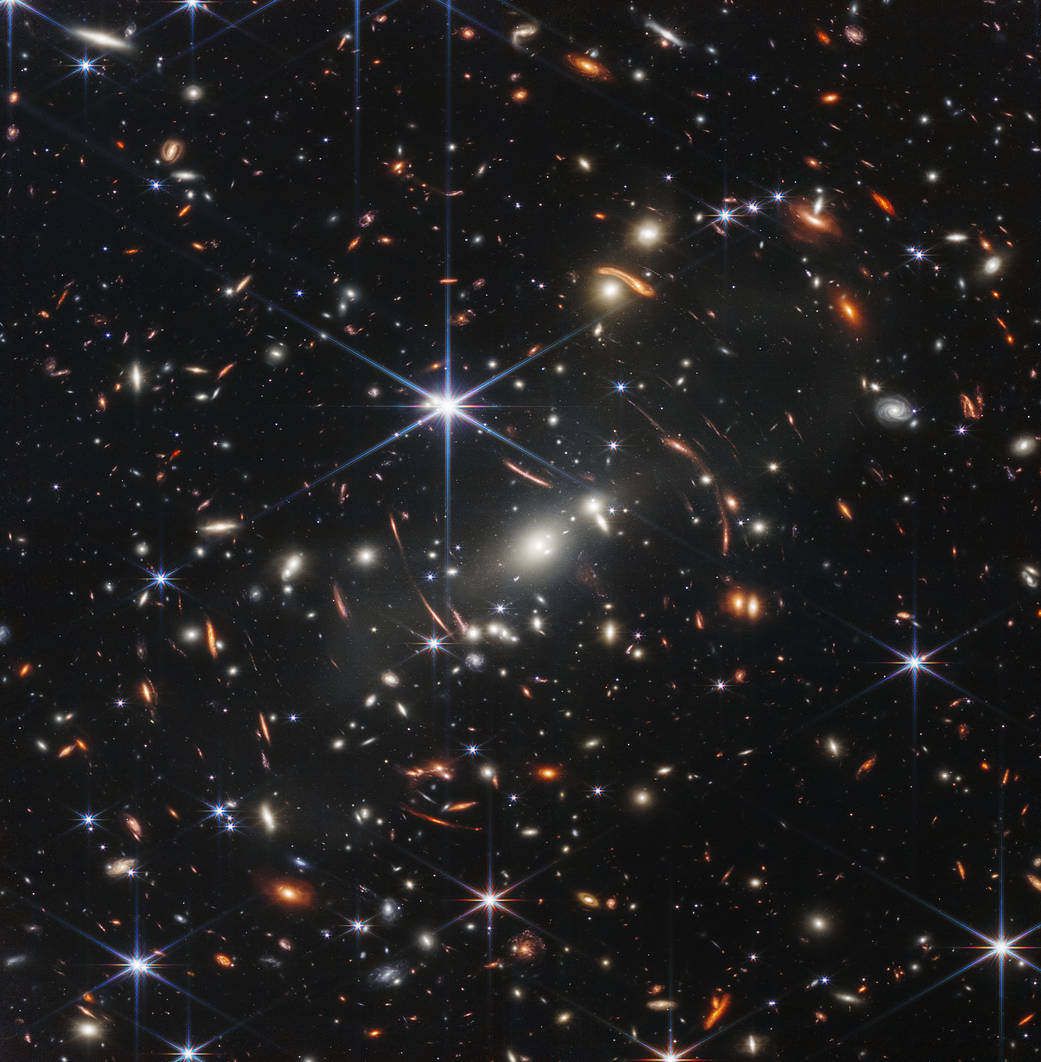
JWST’s first deep field image (Credit: NASA/ESA/CSA).
Key Takeaways
- JWST’s infrared vision uncovers the universe’s earliest galaxies and star-forming regions.
- Identified organic molecules in exoplanet atmospheres, advancing astrobiology.
- Collaboration between NASA, ESA, and CSA ensures global scientific impact :cite[8].
Reliable Sources
Follow @NASAWebb for real-time updates on JWST’s cosmic revelations!
What's Your Reaction?
 Like
0
Like
0
 Dislike
0
Dislike
0
 Love
0
Love
0
 Funny
0
Funny
0
 Angry
0
Angry
0
 Sad
0
Sad
0
 Wow
0
Wow
0